
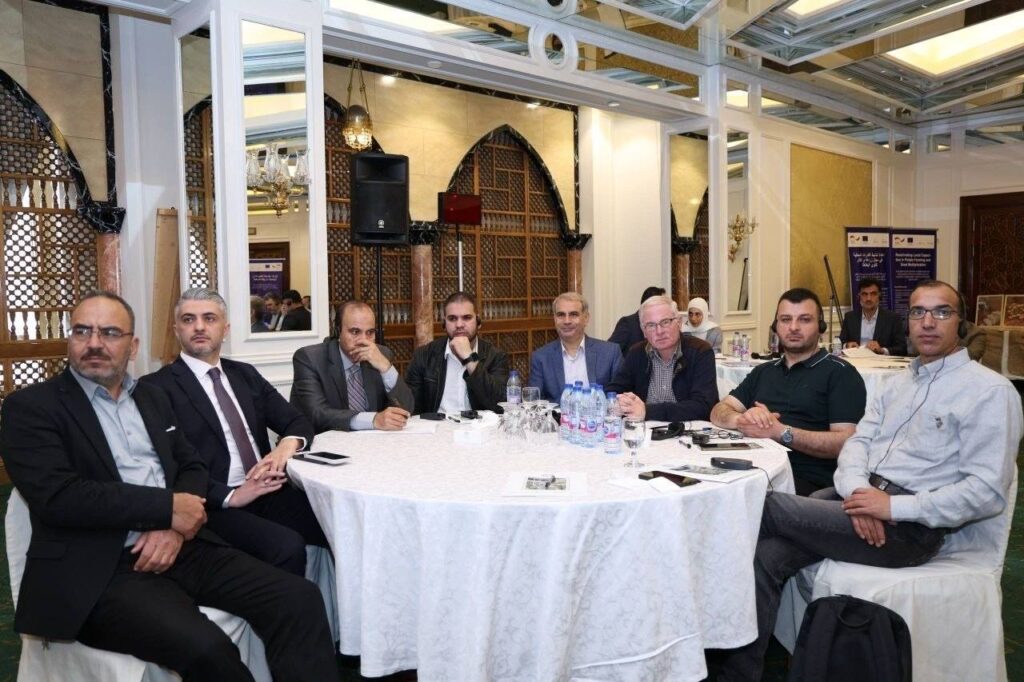
In the presence of representatives from the Ministry of Agriculture, the German Embassy, the European Union, and the German Agency for International Cooperation (GIZ), a workshop titled “Seeds of Resilience” was held today at Cham Hotel in Damascus. The workshop focused on the role of community-based organizations in strengthening the resilience of agri-food systems in Syria. It also showcased initiatives such as the preservation of heritage crops implemented by Ihsan Relief and Development, the enhancement of the olive value chain carried out by Amal Organization for Relief and Development, and the local multiplication of potato seeds implemented by Masarat Foundation for Humanitarian Care and Development.
Sabina Wenz, Head of the Rural Development Program in Syria at GIZ, reaffirmed Germany’s commitment to supporting the agricultural sector. She explained that this support began in northern Syria in 2013 and expanded to cover the entire country after 2024, focusing on strengthening key agricultural value chains, supporting small and medium enterprises, capacity development, and mitigating the impacts of climate change. These efforts aim to enhance resilience, strengthen social cohesion, and create job opportunities, thereby contributing to recovery and self-reliance.
For her part, Katrin Luber, Head of German Development Cooperation, highlighted the readiness of the German government to support Syrian national partners in agriculture, livestock, and water sectors, fostering the transition toward a more self-reliant and resilient economy.
Meanwhile, Liber Khalat, Head of Cooperation at the European Union Delegation to Syria, emphasized the significant potential of Syria’s agricultural sector, reaffirming the EU’s support for the agricultural strategy developed by the Ministry of Agriculture through 2030 to revitalize this sector.
In turn, agricultural engineer Mustafa Mowahad, Director of Agriculture in Idlib, stressed the importance of the project implemented in Idlib Governorate, which aims to preserve the genetic resources of 123 local varieties adapted to climatic conditions. He also highlighted the potato seed production project that has contributed to reducing imports, as well as the olive value chain support project, which enhances agricultural efficiency and strengthens farmers’ ability to continue working despite climate challenges. He added that the workshop reviews the various stages of these projects and discusses future support proposals to ensure sustainable production.